
Project overview
Objectives, scope, and technical context.
At its Eisenbach location in the Black Forest, August Weckermann KG has implemented an on-site energy supply system that sets a new standard for climate-neutral industrial production. Located around 1,000 meters above sea level, the site features an integrated energy system that combines photovoltaics with sheep grazing, rainwater treatment, a redox flow battery, electrolysis, and fuel cells – covering up to 90% of its energy needs on-site.
The aim of the project is to use surplus solar power efficiently, store it in the form of green hydrogen, and convert it back into energy as needed. The project is considered a showcase facility for self-powered production sites in the mid-sized industrial sector and sets new standards.
The engineered solution
Technical, operational, and infrastructural.
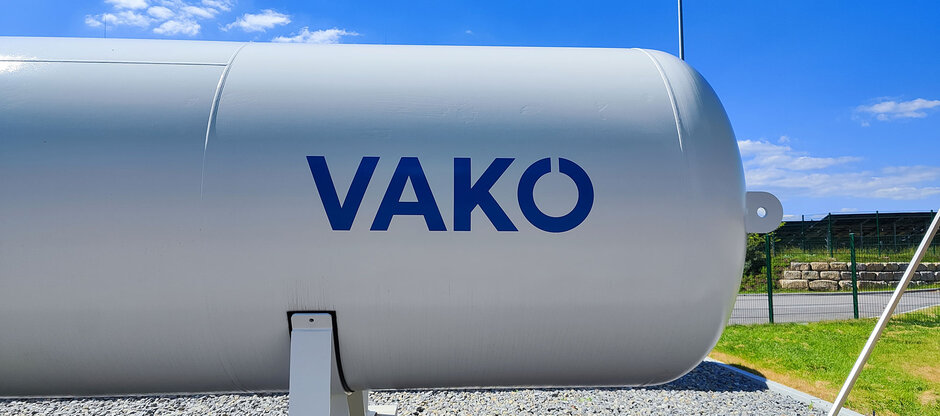
The core of the hydrogen infrastructure comprises four stationary pressurized hydrogen storage vessels from VAKO with a total storage capacity of 1.4 metric tons. Surplus solar power is harnessed to produce green hydrogen, which is stored for later use and converted back into electricity via a fuel cell system as needed.
The storage solution is an integral part of the overall system and allows the hydrogen to be used flexibly as needed. While the battery storage in the system primarily balances short-term day-night fluctuations, the hydrogen vessels provide long-term storage for seasonal energy fluctuations. The two technologies complement each other. Together, they provide a stable energy supply that is largely independent of external sources.
The challenge
Technical and regulatory core requirements.
The key challenge lay in storing hydrogen safely and reliably within a self-contained energy system. In addition to stringent requirements for safety, pressure stability, and long-term availability, the design also had to account for the site’s elevation.
This demanded a storage solution that could reliably handle both continuous stationary operation and dynamic load changes across the electrolysis, storage, and power-generation stages – all while complying with the relevant technical and regulatory requirements.
VAKO’s contribution
Engineering and fabrication – all from VAKO.
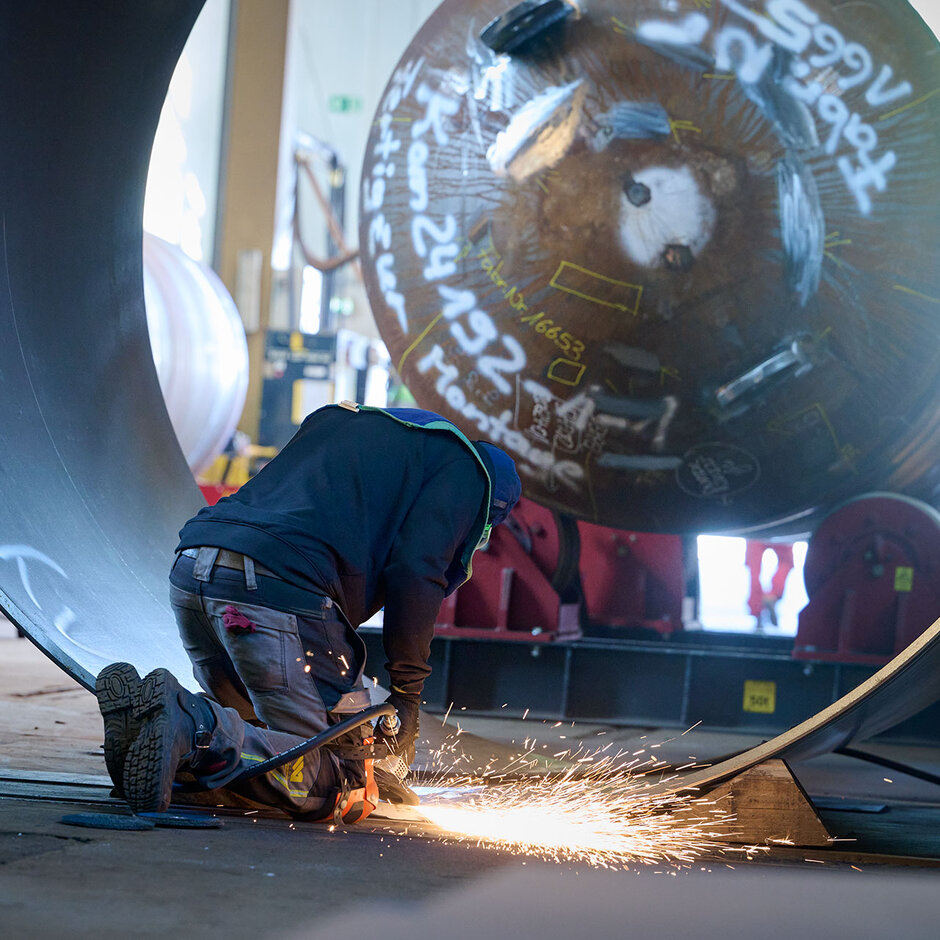
VAKO handled the development, design, and fabrication of the hydrogen storage vessels for the project as well as their delivery and installation. The pressure vessels were specifically designed for stationary use and the particular requirements of a system designed for self-powered operation.
Leveraging its engineering and fabrication expertise, VAKO ensured that the storage solution was integrated safely and efficiently into the overall system with continuous availability. The solution satisfies all relevant technical and regulatory requirements and is designed to operate reliably over the long term.
Results and added value
Reliable performance and long-term benefits.
The August Weckermann project has created a self-powered production site that showcases how renewable energy can reliably power industrial processes. VAKO’s hydrogen storage vessels play a central role in the plant’s operational reliability, flexibility, and efficiency.
The project provides a real-life demonstration of how hydrogen technology can help drive the energy transition in the mid-sized industrial sector – and serves as a blueprint for similar applications in demanding environments.
