
Project overview
Objectives, scope, and technical context.
At the Ausbüttel Waste Management Center (AWZ) in Gifhorn County, a hydrogen project has been developed to link regional circular-economy activities with renewable power generation. The aim was to use locally generated electricity to produce green hydrogen and make it available on-site for municipal applications.
The project lays the groundwork for a decentralized municipal hydrogen infrastructure and shows how existing waste management sites can evolve into energy hubs.
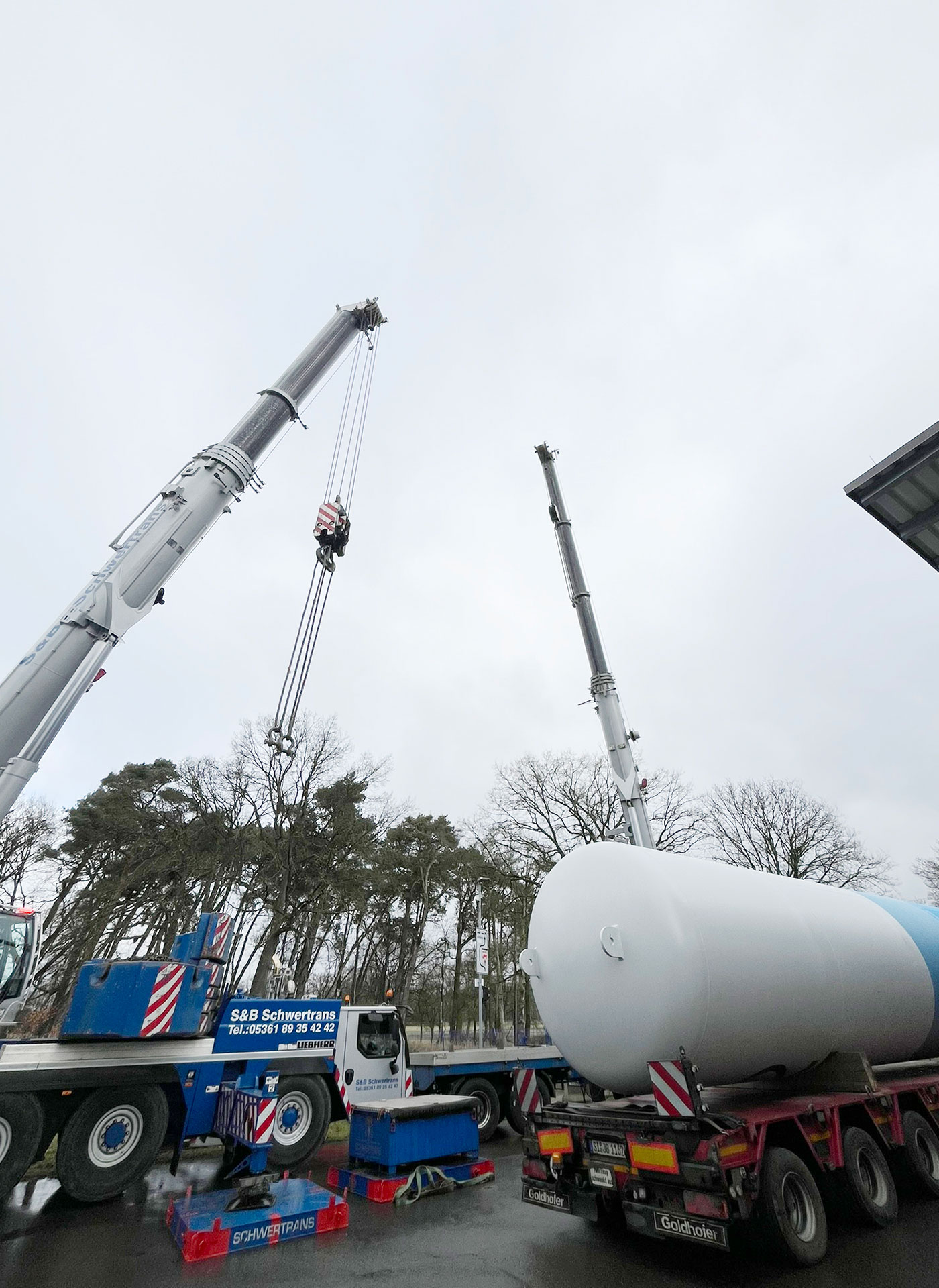
The engineered solution
Technical, operational, and infrastructural.
A modular system is being developed to produce and store green hydrogen at the Ausbüttel Waste Management Center (AWZ). It comprises an electrolysis system powered by locally generated renewable energy, a hydrogen refueling station for municipal vehicles, and two stationary low-pressure hydrogen storage vessels from VAKO.
The storage vessels serve as the buffer between production and use. They absorb peak loads, maintain a continuous supply, and give the system the flexibility needed for day-to-day municipal operations.
The challenge
Technical and regulatory core requirements.
Integrating an electrolysis system into an already operational waste management center posed unique challenges for planning and implementation. In addition to ensuring safe on-site hydrogen storage, the system design had to account for and build on existing infrastructure.
This demanded a solution that would meet stringent safety standards, support long-term operation in an industrial environment, readily accommodate future expansions, and comply with all relevant technical and regulatory requirements.
In addition, the project had to be both cost-effective and regionally scalable.
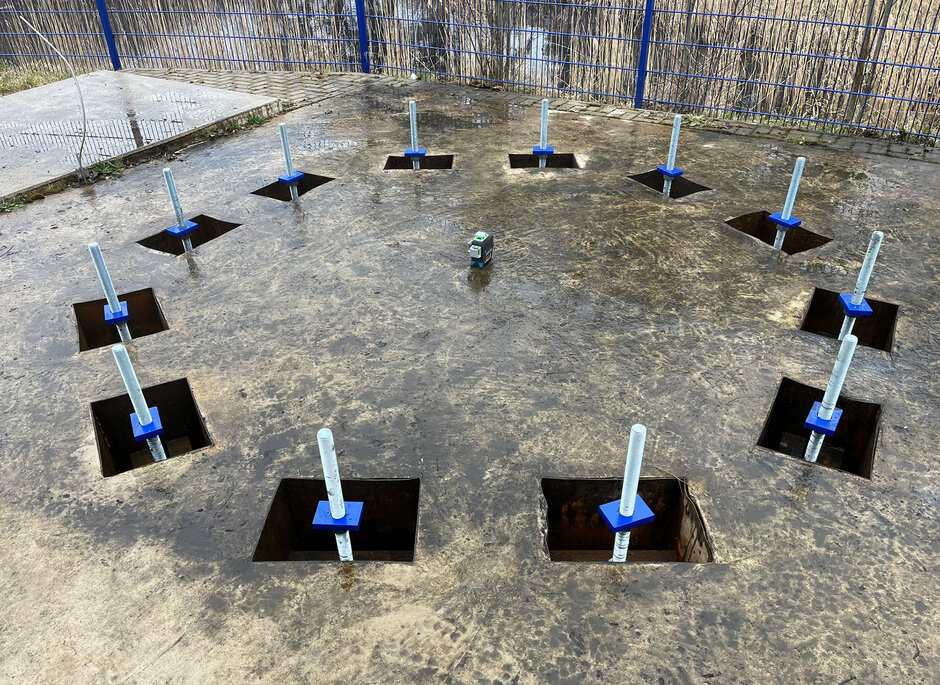
VAKO’s contribution
Engineering and fabrication – all from VAKO.
VAKO supplied and installed two customized low-pressure hydrogen storage vessels designed for stationary use in a municipal-industrial setting.
The storage vessels were engineered for rugged continuous service while ensuring maximum safety and long-term availability. Design and fabrication comply with all relevant standards and testing requirements. Thanks to its modular configuration, the system can be expanded easily in the future.
Leveraging its proven engineering and fabrication expertise, VAKO ensured that the storage vessels were seamlessly integrated into the overall system serving Gifhorn County.
Results and added value
Reliable performance and long-term benefits.
The Ausbüttel project is creating a future-ready municipal hydrogen infrastructure. The site demonstrates how mobility, renewable energy, and circular economy can be intelligently integrated at the regional level.
VAKO’s storage vessels play a central role in the plant’s operational reliability, flexibility, and scalability. The project provides a practical example of how municipal facilities can actively help drive the energy transition.
